
VIEWPOINT - CONTAINERS
By Antonella Teodoro
•
June 23, 2026
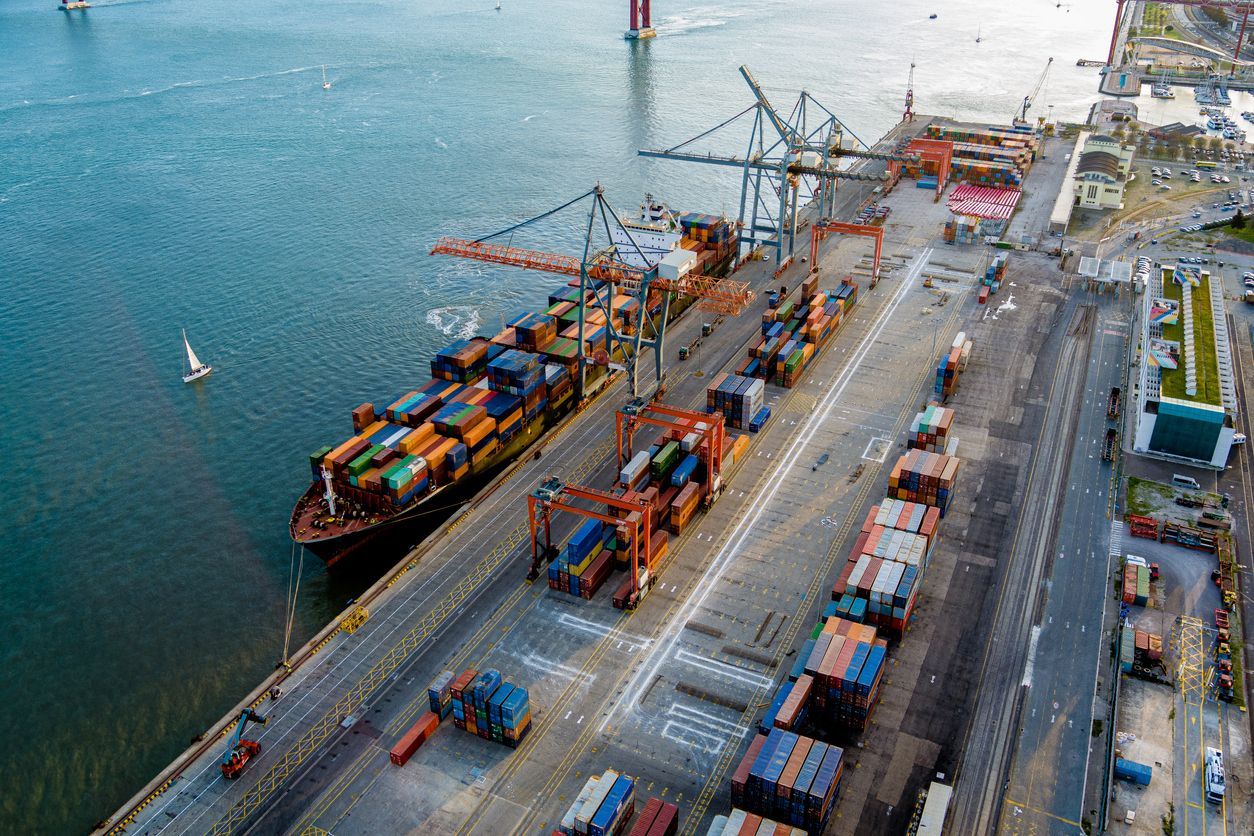
Analysis from MDST’s Containership Databank shows that restructuring of the global container shipping alliances is reshaping capacity deployment across the major East-West trades, with independent lines becoming more prominent. A comparison of capacity deployment by container shipping lines from the MDST Contanership Databank between April 2026 and April 2025 highlights how carriers have adjusted network deployment following the introduction of the Gemini Cooperation and the Premier Alliance. While overall capacity trends vary by trade lane, a common theme is the growing importance of capacity deployed outside the major alliance structures. Across the three east-west corridors analysed (Europe-North America, Far East-Europe and Far East-North America) capacity operated by carriers outside the main alliances (including MSC on its own) increased in relative importance, although with differences between trades. Europe-North America: a contracting market with Gemini gaining share The Europe-North America trade corridor was the only corridor to record an overall decline in capacity. Total scheduled capacity fell by around 9% year-on-year, reflecting a weaker market and a rationalisation of transatlantic networks. Against this backdrop, the Gemini Cooperation was the only major grouping to expand capacity, increasing deployment by almost 3% and raising its market share from 22% to 24%. By contrast, the Ocean Alliance reduced capacity by more than 24%, resulting in the largest market share loss among the major groupings. MSC also reduced deployment by 12%, although it remained the single largest operator on the trade, accounting for approximately one-third of total capacity. Capacity operated outside the alliance structure declined modestly (-8%), but the "Others" category still represented nearly 30% of total market capacity. Unlike the other trade lanes, much of this segment from a capacity point of view was composed of standalone services operated by major carriers such as Maersk, Hapag-Lloyd, CMA CGM and ZIM, rather than by a large number of niche operators. ZIM remained the largest truly independent carrier on the trade through its ZCA service, while other independent operators included ACL, Eimskip, Arkas/Turkon, NIRINT and several specialised North Atlantic carriers.
By Chris Rowland
•
June 23, 2026
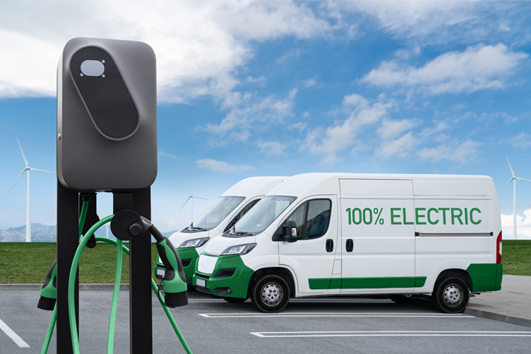
In response to a need for evidence-based analysis of the location, energy requirement and profitability of en route charging of a future decarbonised HGV fleet, MDST has developed a new module of its Great Britain Freight Model (GBFM) called the eHGV Charging Infrastructure Module. The results from a central scenario from this GBFM module suggest that a national network of 370 eHGV charging hubs, with about 17,000 chargers and requiring 7GW of capacity, would be required once the whole fleet is electrified. The operators of eHGVs with duty cycles over longer distances away from their depots or over two shifts in a 24-hour period, need to optimise the use of rapid chargers at public charging hubs by taking maximum advantage of the vehicles’ unavoidable downtime. This is likely to involve the eHGVs having batteries that allow the vehicle to drive for up to about 4.5 hours and then use rapid chargers at en route charging hubs to top up the battery within their drivers’ statutory breaks, including when making deliveries and collections. To analyse this in more detail, MDST has developed the GBFM eHGV Charging Infrastructure Module to assess the demand and electricity required for, and profitability of, a network of eHGV charging hubs around Great Britain. The results of the modelling show that the highest demand for public charging would be on the M25/M1/M6 axes. One central scenario we modelled suggests that, once the HGV fleet is more or less fully electric, about 370 public en route charging hubs, each with an average of 45 chargers, would be required – all provided by private sector operators without public subsidy. In parallel, the country needs to plan for the supply of the electricity – in terms of its generation, its transmission and the connections to the eHGV charging hubs. This is a major challenge, given that our modelling suggests almost 7GW of capacity would be required from 17,000 individual chargers to provide 105GWh of output per day. 7GW is roughly the combined capacity of Hinckley Point C and Sizewell C nuclear power stations. The GBFM eHGV Charging Infrastructure Module was developed with the assistance of an industry player, but is now available for use by other parties with an interest in the location and profitability of en route charging infrastructure; scenarios can be developed to take account of the origins and destinations of movements of specific fleets, as well as demand from the whole British HGV fleet.
By Chris Rowland
•
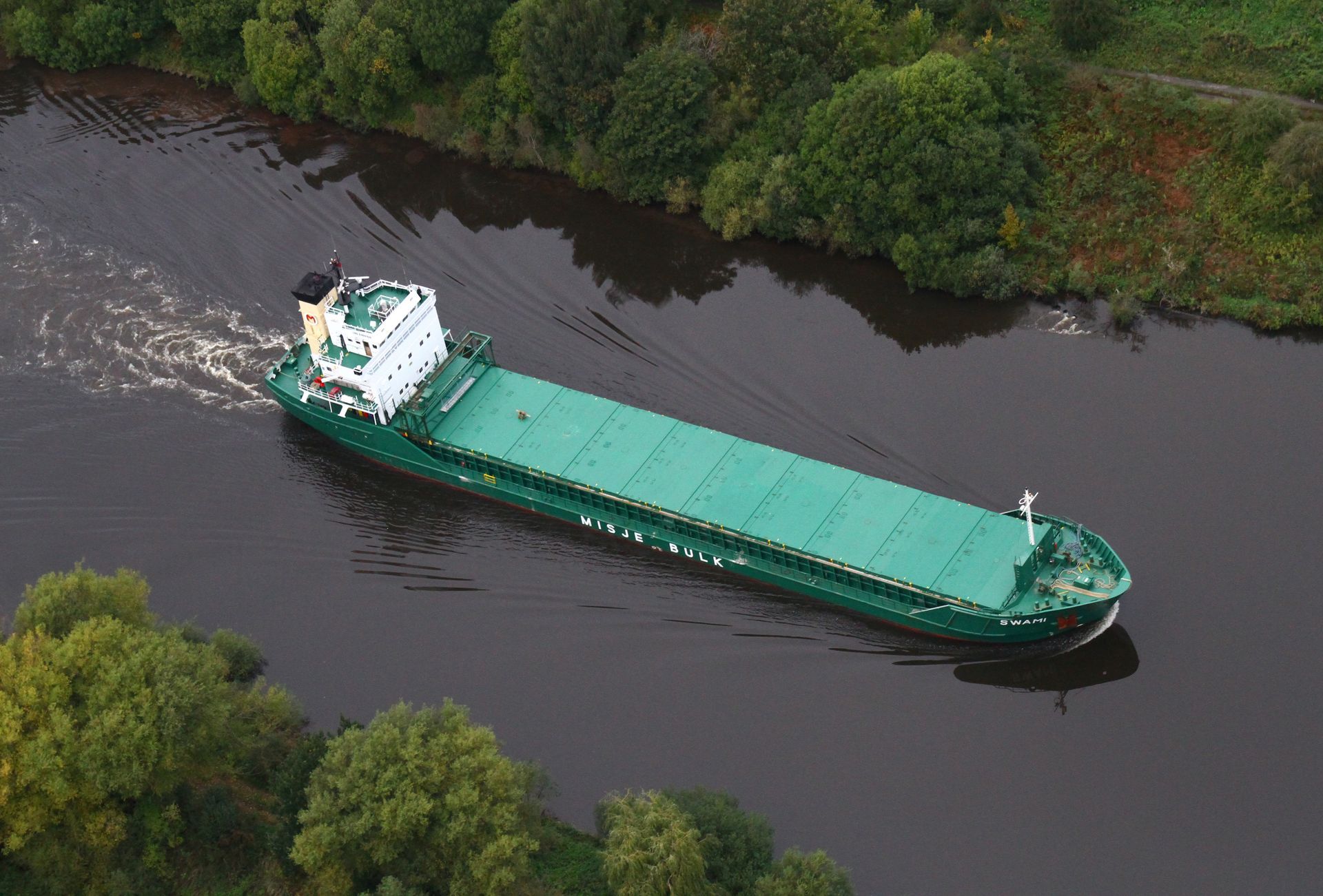
June 22, 2026
The UK Maritime Emissions Trading System (ETS) is the extension of the UK ETS Scheme to domestic maritime emissions from 1 July 2026, covering ships of more than 5,000 gross tonnes on domestic UK voyages, and all in‑port emissions. This article explores how it might have an impact on port calls and modal shares. The UK Maritime Emissions Trading System (ETS) is the extension of the UK ETS Scheme to domestic maritime emissions from 1 July 2026, covering ships of more than 5,000 gross tonnes on domestic UK voyages, and all in‑port emissions. It mirrors the European Union’s ETS structure but is not yet linked to the EU system. The UK Government intends to include a share of international maritime emissions in the UK ETS, but not before 2027 or 2028. The existing UK ETS provides therefore an incentive, at least in the short term, for ships to call at a British port before calling at a port on the continental mainland, thereby leading to a potential market distortion. It is likely that the extension of the UK maritime ETS to international shipping movements is part of an on-going negotiation with the EU which also covers wider issues such as reducing the bureaucracy related to trading in plant and animal products and the introduction of a UK-EU reciprocal Youth Experience Scheme. The other market impact is between modes of transport for domestic movements of goods within Great Britain because coastwise movements of goods, such as feeder containers, oil products and aggregates will be subject to additional costs under the ETS that are not being applied to road and rail. In addition, the UK’s Chancellor for the Exchequer has responded to the spectre of additional inflation in the economy as a result of the war in the Gulf by continuing a freeze of Fuel Duty for road hauliers, with the temporary 5p cut extended to the end of 2026. Hauliers have also received a 12‑month Vehicle Excise Duty (VED) holiday, paying only £1 at renewal — a saving of £600 per annum for a typical HGV and £912 for the largest vehicles. Red diesel duty was also cut by over a third, to its lowest rate in more than 20 years, until the end of 2026 — benefiting rail freight operators. These more or less simultaneous changes in favour of road haulage and rail freight and to the disadvantage of coastal shipping are likely to have an impact on the modal split for domestic freight, with the main losers being some shipping lines and ports which would otherwise handle the maritime traffic.